
Discover if WordPress is still the best platform for your business in 2026. This in-depth analysis covers AI tools, ownership, and how to build a sustainable digital foundation.
If you’re a business owner, you might recognize the feeling. Suddenly, what used to work does not work the same way. The strategies feel tired, the energy is different, and there’s a quiet question you can’t quite shake: Is this just how it is now? This feeling of being out of sync often appears when it’s time to build or rebuild your website. The landscape feels overwhelming, and the tools that were once industry standards now come with questions.
For years, WordPress has been the default answer for a serious business website. But for many women entrepreneurs, the name itself can bring on a wave of “tech fatigue.” Does choosing WordPress mean signing up for a complicated, overwhelming system you don’t have time to manage? Does it represent another potential source of “tech shame,” that feeling of being left behind while everyone else seems to understand the jargon?
This isn’t a post about hype or urgency. It’s a quiet, practical look at a tool you’ve likely considered for years. The digital world has shifted, and it’s fair to ask whether WordPress has shifted with it, or if it’s a relic of a more complicated time. The goal here is not to push you toward a decision but to provide clear information, so you can choose a foundation that respects your energy instead of draining it.

Key Takeaways
- Demand True Ownership: Choose a platform like WordPress where you own your digital asset completely, ensuring sovereignty and freedom from restrictive ecosystems.
- Leverage Modern AI: The complexity barrier of WordPress has been dismantled by AI-powered builders that deliver professional results without the technical hassle.
- Master Your Site Without Code: Modern WordPress tools are designed for non-technical users, allowing you to build and customize a professional site using intuitive drag-and-drop interfaces.
- Build on a Flexible Foundation: The open-source nature of WordPress provides unparalleled flexibility, allowing your website to evolve and add new capabilities as your business grows.
- Create a Central Hub for Your Marketing: A WordPress site can serve as the integrated core of your business systems, helping you transition from a hands-on “operator” to a strategic “owner.”
- Ensure Your Freedom to Move: With WordPress, you are never locked in. You can migrate your entire site to any hosting provider at any time, maintaining full control over your digital presence.
- Trust in a Platform Built for the Future: With major products in its ecosystem carrying copyright dates into 2026, WordPress is a platform that is actively adapting and building for long-term relevance.
Why Are We Even Asking This in 2026?
It’s a smart question. For years, the pace of technology has been relentless, leaving many successful founders feeling “left behind” or battling “tech fatigue.” Market analysis of female business owners reveals a deeply felt “Tech Shame”—the feeling of inadequacy when faced with complex systems, new AI tools, and the pressure to understand it all. You are focused on running a real business, not becoming a full-time web developer.
For busy professionals, the traditional WordPress setup process—finding hosting, choosing a theme, installing plugins, and managing security—can feel like another mountain to climb. The creators of modern WordPress tools acknowledge this, noting that the process “can feel overwhelming,” especially for beginners.
Asking if WordPress is still the right choice isn’t a sign of being behind the curve; it’s a sign of strategic thinking. It’s about building sustainable, calm, repeatable systems for your business, like we focus on at Hours Back Lab, not just chasing the “shiny new tool” that promises a quick fix but delivers more complexity.
The Biggest Reason to Still Choose WordPress: You Actually Own It
In a digital world of rented platforms and closed ecosystems, WordPress stands apart for one fundamental reason: you own it completely. This isn’t a minor detail; it’s the most significant long-term benefit of the platform.
Because WordPress is open-source, you “stay in full control of your site.” This directly contrasts with “restrictive setups” where the platform provider dictates what you can and cannot do. This ownership translates into critical business advantages:
- You can move your site anywhere. If you’re unhappy with your hosting provider, you can “migrate it to any provider you prefer, keeping full control over your online presence.” You are never locked in.
- Your site won’t break. If you use a premium theme and decide not to renew the license after a year, your website will not stop working. The core functionality remains intact, ensuring business continuity.
This level of control aligns directly with the deepest values held by many female founders: the desire for sovereignty, autonomy, and freedom. Owning your website isn’t just a technical feature; it’s a strategic asset that ensures your digital home base belongs to you and no one else.
But Isn’t WordPress Notoriously Complicated?
This is the most common and historically valid objection to WordPress. For years, it had a steep learning curve. However, the ecosystem heading into 2026 is fundamentally different, with new tools specifically designed to eliminate this barrier.
The idea that you need to be a technical expert is no longer true. Here’s what has changed:
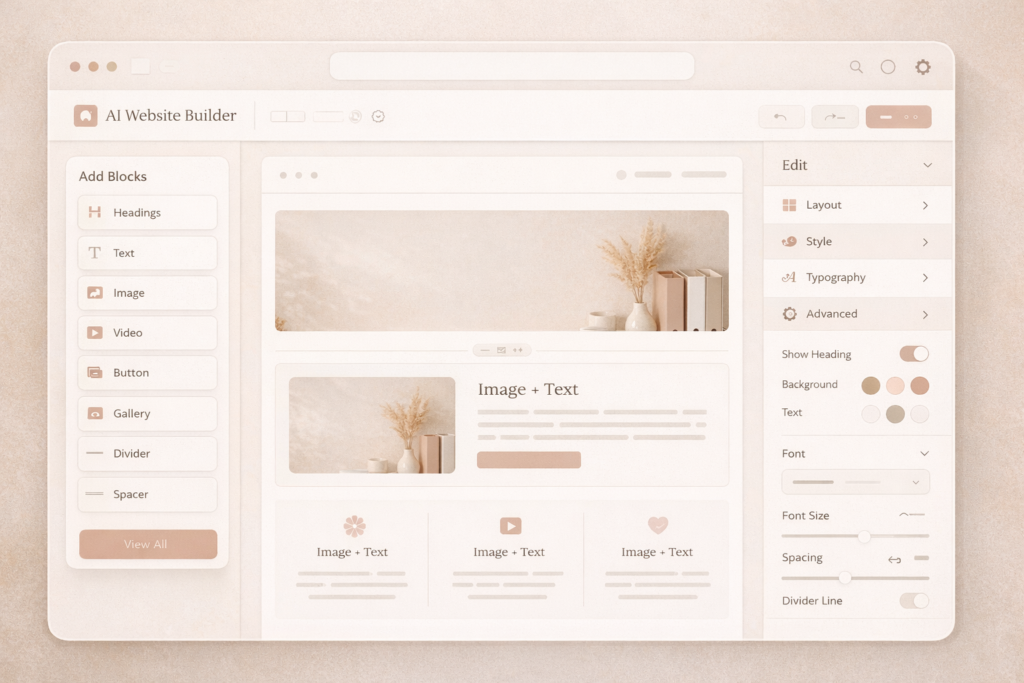
- AI Builds the First Draft For You: New tools like ZipWP are AI Website Builders that can create a complete, professional WordPress site—with design, layout, and content—from a simple text description of your business. The stated goal is to provide “Pro Results, No Tech Hassle.” This isn’t just a technical shortcut; it’s a direct answer to the “Tech Shame” many founders feel. It eliminates the fear that you’re not qualified to build a professional-grade asset for your own business.
- Modern Themes are No-Code: Themes like Astra, used by millions, are designed to let you build a professional website “without writing a single line of code.” They integrate with drag-and-drop page builders, making customization intuitive.
- AI Assistants Help You Edit: Once your site is generated, AI assistants are available directly “within WordPress” to help you fine-tune copy, change images, or adjust layouts, acting as a built-in helper.
While WordPress was once known for its complexity, the tools available today are built to remove that “tech hassle.” The ecosystem has evolved to serve busy professionals and non-technical users who want a powerful website without the steep learning curve.
How a WordPress Site Becomes Your Marketing Foundation
For many founders, the business becomes a bottleneck because everything runs through them. The “Siloed Specialist” model is common: you hire a web developer for WordPress, a social media manager for Buffer, and a VA for your email, but you become the human “API” connecting them all, creating a “Frankenstein” infrastructure held together by your constant involvement.
A properly configured WordPress site offers the antidote. It becomes the central hub that creates the “calm, repeatable systems” that allow you to move from being the primary “doer” to the strategic “owner.”
Instead of being an abstract concept, this is what it looks like in practice. Currently, your lead magnet might live on one platform, your newsletter on another, and your scheduling tool on a third. You are the one copying and pasting data between them. A WordPress hub means your new subscriber form, your email sequence, and your booking calendar can all reside in the same system. Data flows automatically, creating a workflow that doesn’t require your constant intervention. Your website becomes the single source of truth—the foundation upon which you build clear, simple systems that give you your time back.
Practical Decision Filters: Is WordPress Right For You?
To move from theory to a clear decision, consider these five questions about your long-term vision for your business.
- Do you want to own your website and content forever? If having full control and never being at risk of a platform shutting down or changing its terms is a priority, the open-source nature of WordPress is a major advantage.
- Is it important that you can move your site to any host in the future? If you value flexibility and don’t want to be locked into a single provider’s pricing or performance, WordPress’s portability is a key benefit.
- Do you want a foundation that can grow with you, adding new features over time? The flexibility and extendibility of WordPress mean it can adapt as your business evolves, from a simple blog to a full e-commerce store or membership site.
- Are you willing to use modern AI-powered tools to simplify the initial setup? If the idea of an AI Website Builder creating your initial site sounds appealing, then the modern WordPress ecosystem is designed for you.
- Is your goal to build a central asset for your business, rather than relying on siloed platforms? If you want to escape the “Siloed Specialist” trap and create a unified hub for your marketing, a WordPress site is the natural foundation for that system.
What We Still Don’t Know
Transparency is important. While the new tools in the WordPress ecosystem are impressive, the source materials have a few blind spots.
First, while AI tools dramatically simplify the creation of a WordPress site, the sources don’t detail the long-term, week-to-week reality of maintaining plugins and security yourself. Ownership comes with responsibility, and the ongoing maintenance effort is not fully quantified.
Second, the sources praise the speed and performance of sites built with modern themes and AI builders, but they do not offer independent, third-party benchmarks against other popular website platforms.
Conclusion: A Foundation That’s Adapting With You
The feeling of tech overwhelm is valid. It can seem like just as you get comfortable with one set of tools, the ground shifts beneath your feet. The question of whether a long-standing platform like WordPress is still relevant is not just practical, but necessary.
The answer, heading into 2026, appears to be a clear “yes,” but with an important clarification: this is not the complicated WordPress of the past. The ecosystem is actively evolving to solve the very problems that created its reputation for being difficult. It is adapting to meet the needs of busy founders who value their time and energy.
The powerful combination of true ownership, thanks to its open-source foundation, and newfound accessibility, driven by intelligent AI builders, makes WordPress a compelling choice for entrepreneurs building for the long term. It offers a foundation that doesn’t just work for your business today, but one that can patiently and powerfully adapt with you for years to come.